
April 30
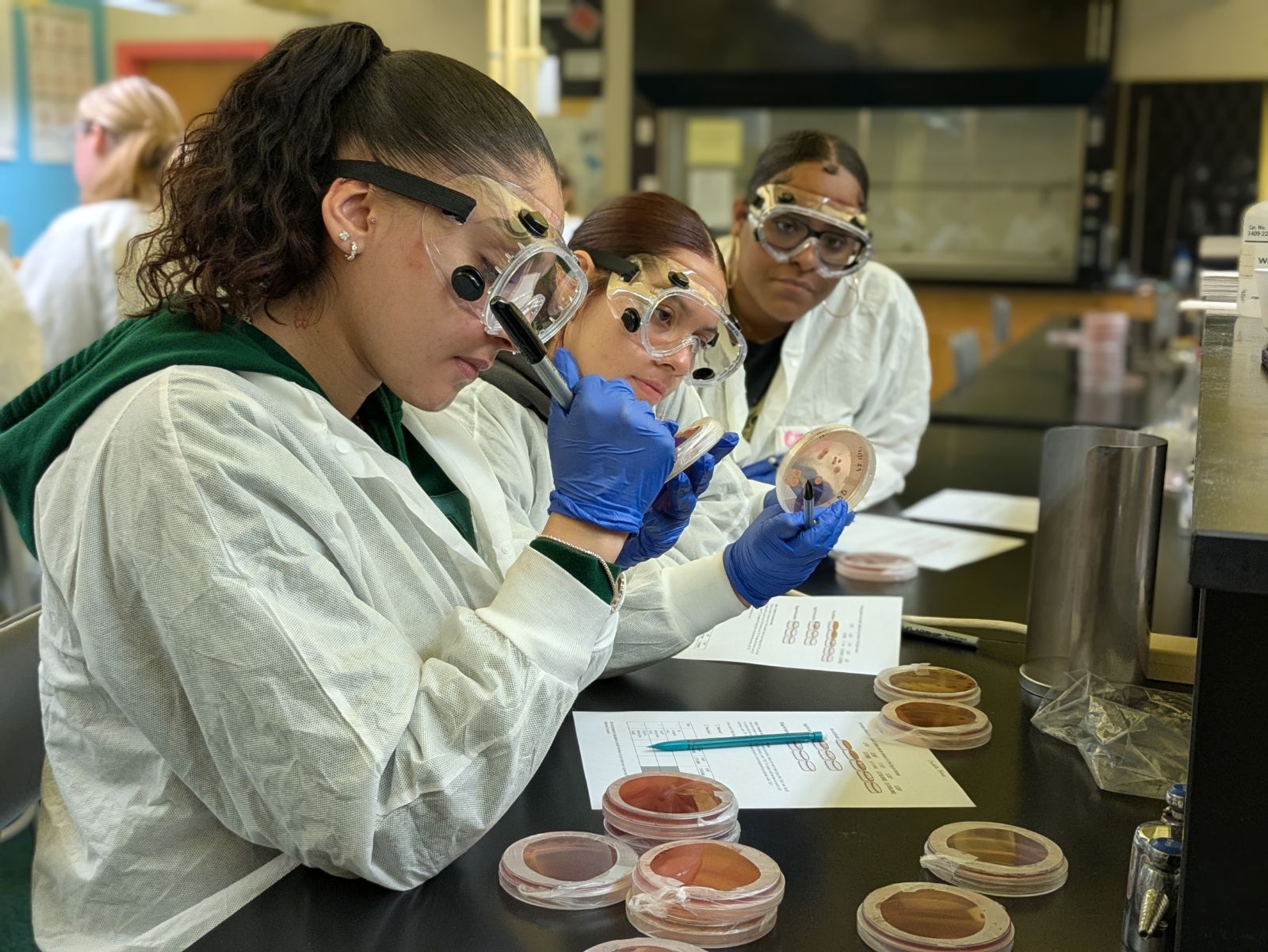
Students in Dr. Sarah Olken’s Microbiology course got their hands dirty this month, directly applying what they’ve learned in the classroom to a serious public health issue.
In a collaboration between North Shore Community College (NSCC) and Essex North Shore Agricultural and Technical High School, students from both schools participated in Tufts University’s Prevalence of Antibiotic Resistance in the Environment (PARE) project.
What’s Antibiotic Resistance?
Antibiotic resistance happens when bacteria evolve to survive the very drugs designed to kill them, and the number of antibiotic-resistant bacteria is increasing year over year. What starts as a genetic advantage for a few microbes can quickly become a global threat, spreading infections that are harder, costlier, and sometimes impossible to treat.
Through the PARE Project, students around the world are helping map where resistance is emerging. By crowdsourcing real-world data, they’re identifying hotspots and contributing to a growing effort to better understand these dangerous bacteria.
Microbiology in Action
Many NSCC students collected samples from their yards or nearby parks to create a working microbe sample size. This hands-on learning opportunity allowed them to practice their research skills, work collaboratively, and learn more about the microbes literally in their own backyard.
“Students generate new data from these locations, some of which have never been studied before. While textbooks can explain concepts and provide real world examples, a project like this goes beyond memorizing information by demonstrating microbiology in action; science is messy, sometimes generating unexpected data, and there is not one 'right' answer,” explained Dr. Olken.
NSCC students worked with high school students from Essex Tech to collect and analyze soil samples. After diluting the soil, the students placed the samples on three plates with varying amounts of the antibiotic tetracycline: one with no tetracycline, one with a low amount of tetracycline, and one with a high amount of tetracycline. After letting the samples incubate for a week, the students counted the number of bacterial colonies in order to extrapolate the prevalence of antibiotic-resistant bacteria.
“Success is not simply the data collected but that students come away with an awareness of what it means to study microbiology,” said Dr. Olken. “Some students come away with an appreciation for the collection and analysis of data that impacts human health and policy, others use this information for advocacy in their community, and they may find a new interest in research science that they weren't aware of before.”